

How to Stop Overthinking and Calm an Anxious Mind: 15 Practical Strategies That Work
☰Table of Contents
- H3Key Takeaways
- H2What Is Overthinking?
- H2Why Do People Overthink?
- H3Fear of Failure
- H3Anxiety and Stress
- H3Perfectionism
- H3Low Self-Confidence
- H3Past Experiences
- H2Signs You Are Stuck in an Overthinking Cycle
- H3You Replay Conversations Repeatedly
- H3You Struggle to Make Decisions
- H3You Constantly Expect Negative Outcomes
- H3You Have Trouble Sleeping
- H3You Seek Constant Reassurance
- H2How Overthinking Affects Mental and Physical Health
- H3Increased Anxiety
- H3Emotional Exhaustion
- H3Poor Sleep Quality
- H3Reduced Productivity
- H3Physical Symptoms
- H215 Practical Ways to Stop Overthinking and Calm an Anxious Mind
- H31. Focus on What You Can Control
- H32. Challenge Negative Thoughts
- H33. Practice Mindfulness Daily
- H34. Set a Time Limit for Worrying
- H35. Write Down Your Thoughts
- H36. Stop Seeking Constant Reassurance
- H37. Stay Busy with Meaningful Activities
- H38. Practice Deep Breathing
- H39. Limit Social Media Consumption
- H310. Get Regular Exercise
- H311. Improve Your Sleep Routine
- H312. Focus on Facts Instead of Assumptions
- H313. Talk to Someone You Trust
- H314. Learn to Accept Uncertainty
- H315. Seek Professional Support When Needed
- H2Daily Habits That Help Reduce Overthinking
- H2When Overthinking May Be Linked to Anxiety Disorders
- H2Final Thoughts
- H2Frequently Asked Questions About How to Stop Overthinking
Have you ever replayed a conversation in your head dozens of times, worried about something that might happen in the future, or struggled to switch off your thoughts before going to sleep? If so, you are not alone. Millions of people struggle with overthinking every day.
Learning how to stop overthinking and calm an anxious mind can feel difficult, especially when your thoughts seem impossible to control. What starts as a simple concern can quickly turn into endless analysis, worst-case scenarios, and constant worry.
While thinking carefully about important decisions is healthy, overthinking is different. Instead of helping you solve problems, it often creates more stress, confusion, and anxiety. It can affect your relationships, work performance, sleep quality, and overall well-being.
The good news is that overthinking is a habit that can be managed. By understanding why it happens and applying practical strategies, you can reduce anxiety, quiet racing thoughts, and develop a healthier relationship with your mind.
In this guide, you will learn what causes overthinking, how it affects your mental health, and practical techniques to stop overthinking and regain peace of mind.
Key Takeaways
- Overthinking often increases anxiety rather than solving problems.
- Negative thought patterns can become habits over time.
- Mindfulness and self-awareness can help break the cycle.
- Small daily habits can significantly reduce stress and worry.
- Professional support can help if anxiety becomes overwhelming.
What Is Overthinking?
Overthinking occurs when you spend too much time analyzing, worrying, or replaying situations in your mind. Instead of focusing on solutions, your thoughts become repetitive and unproductive. Many people mistake overthinking for problem-solving. However, there is a major difference between the two.
Problem-solving focuses on finding practical solutions and taking action. Overthinking keeps you stuck in a loop of uncertainty, fear, and doubt.
For example, if you make a mistake at work, problem-solving would involve identifying what went wrong and deciding how to improve. Overthinking would involve replaying the mistake repeatedly, imagining negative outcomes, and criticizing yourself for hours or even days. Common signs of overthinking include:
- Constantly replaying conversations
- Worrying about future events
- Difficulty making decisions
- Overanalyzing small details
- Expecting the worst-case scenario
- Struggling to relax or sleep
The longer these patterns continue, the more difficult they can become to break.
Why Do People Overthink?
Understanding the cause of overthinking is an important step toward overcoming it. Different people overthink for different reasons, but several common factors often contribute. Identifying the root cause can help you develop healthier coping strategies and prevent negative thought patterns from becoming a daily habit.
Fear of Failure
Many people overthink because they are afraid of making mistakes. They want to make the perfect decision and avoid disappointment, so they spend excessive time analyzing every possible outcome. This fear often prevents them from taking action and moving forward with confidence.
Anxiety and Stress
Anxiety naturally causes the brain to search for potential threats. When stress levels increase, the mind becomes more focused on problems, risks, and uncertainties. As a result, even small situations can feel much bigger and more difficult than they actually are.
Perfectionism
Perfectionists often believe there is a perfect choice or perfect outcome. This mindset can make even simple decisions feel overwhelming. They may spend hours evaluating options because they fear making the wrong decision or facing criticism.
Low Self-Confidence
People who doubt themselves often second-guess their decisions. They may constantly seek reassurance and question whether they made the right choice. Over time, this lack of confidence can strengthen the habit of overthinking and increase anxiety levels.
Past Experiences
Negative experiences from the past can influence current thinking patterns. If someone has experienced failure, rejection, or disappointment before, they may become more cautious and prone to overthinking. Their minds try to avoid future pain by constantly analyzing possible outcomes.
Signs You Are Stuck in an Overthinking Cycle

Sometimes, overthinking becomes so normal that people do not realize how much time and energy it consumes. What may seem like careful thinking can actually become a cycle of worry that affects daily life, productivity, and emotional well-being. Here are some common warning signs:
You Replay Conversations Repeatedly
After talking to someone, you may spend hours analyzing every word you said and wondering if you made a mistake. You may also worry about how the other person interpreted your words, even when there is no reason for concern.
You Struggle to Make Decisions
Even simple decisions feel stressful because you are worried about choosing the wrong option. Instead of moving forward confidently, you keep reviewing possibilities and delaying action.
You Constantly Expect Negative Outcomes
Your mind automatically focuses on what could go wrong rather than what could go right. This habit can increase anxiety and make everyday situations feel more threatening than they really are.
You Have Trouble Sleeping
Racing thoughts often become stronger at night when there are fewer distractions. Many people find themselves replaying events, worrying about the future, or creating worst-case scenarios before bedtime.
You Seek Constant Reassurance
You frequently ask others if you made the right choice or if everything is okay. While reassurance may provide temporary comfort, the doubts often return shortly afterward. Recognizing these patterns is the first step toward changing them. Once you become aware of these habits, it becomes easier to replace them with healthier ways of thinking.
How Overthinking Affects Mental and Physical Health
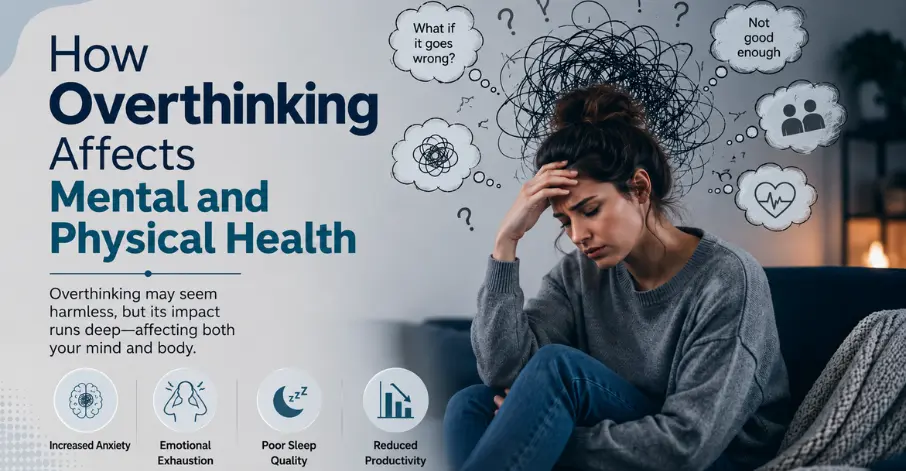
Many people assume overthinking is only a mental habit. However, it can also affect physical health and overall quality of life. When the mind remains under constant pressure, the body often experiences the effects as well.
Increased Anxiety
Overthinking fuels anxiety by keeping your brain focused on potential problems and dangers. The more you worry about possible outcomes, the more anxious and stressed you may feel.
Emotional Exhaustion
Constant worrying drains mental energy and makes it difficult to enjoy everyday life. Over time, this can leave you feeling overwhelmed, frustrated, and emotionally exhausted.
Poor Sleep Quality
Many people with anxiety struggle to fall asleep because their minds remain active long after bedtime. Poor sleep can further increase stress and make overthinking even more difficult to manage.
Reduced Productivity
Overthinking often leads to indecision and procrastination, making it harder to complete tasks. Instead of taking action, people become stuck analyzing every possibility.
Physical Symptoms
Chronic stress and anxiety can contribute to headaches, muscle tension, fatigue, digestive problems, and other physical symptoms. Some people may also experience increased heart rate or difficulty concentrating throughout the day.
This is why learning how to stop overthinking and calm an anxious mind is important not only for mental health but also for physical well-being. Reducing overthinking can improve focus, sleep quality, emotional balance, and overall quality of life.
15 Practical Ways to Stop Overthinking and Calm an Anxious Mind
1. Focus on What You Can Control
One of the biggest causes of overthinking is worrying about things outside your control. You cannot control other people's opinions, unexpected events, or every future outcome. However, you can control your actions, attitude, and response. Whenever you notice yourself worrying excessively, ask: "What can I actually control right now?" Shifting your attention toward actions you can take reduces anxiety and creates a sense of empowerment.
2. Challenge Negative Thoughts
Not every thought you have is true. People who overthink often assume their fears are facts. They may believe a mistake means failure or that one setback predicts future problems. When negative thoughts appear, challenge them by asking:
- Is there evidence for this thought?
- Am I assuming the worst?
- What would I tell a friend in this situation?
This simple habit can help break automatic negative thinking patterns.
3. Practice Mindfulness Daily
Mindfulness is one of the most effective ways to calm an anxious mind. Instead of focusing on the past or future, mindfulness helps you stay present in the current moment. Simple mindfulness exercises include:
- Deep breathing
- Guided meditation
- Paying attention to your surroundings
- Mindful walking
Even five minutes per day can make a noticeable difference over time.
4. Set a Time Limit for Worrying
Trying to eliminate worry often makes it stronger. Instead, create a dedicated "worry time." For example, allow yourself 15 minutes each day to think about concerns and possible solutions. Once that time ends, redirect your attention to other activities. This technique prevents worry from taking over your entire day.
5. Write Down Your Thoughts
Journaling can help organize thoughts and reduce mental clutter. When worries stay inside your head, they often feel bigger than they really are. Writing them down helps create perspective and makes problems feel more manageable. Many people find that simply seeing their thoughts on paper reduces anxiety significantly.
6. Stop Seeking Constant Reassurance
Many people who struggle with overthinking seek reassurance from friends, family, or partners. While occasional reassurance is normal, constantly asking others if everything is okay can reinforce anxiety instead of reducing it. The problem is that reassurance only provides temporary relief. Before long, new doubts appear, and the cycle starts again. Instead of depending on others for certainty, try building confidence in your own judgment and decision-making abilities. Remind yourself that uncertainty is a normal part of life. You do not need to have every answer immediately.
7. Stay Busy with Meaningful Activities
An idle mind often creates more opportunities for overthinking. When you have too much unstructured time, your brain may focus on worries, regrets, or future concerns. Keeping yourself engaged in meaningful activities can help redirect your attention and reduce mental clutter. This does not mean staying busy every minute of the day. Instead, focus on activities that bring purpose, enjoyment, or personal growth. Reading, exercising, learning a new skill, volunteering, or spending time with loved ones can help shift your focus away from anxious thoughts.
8. Practice Deep Breathing
When anxiety increases, your body often responds by becoming tense and alert. Deep breathing helps activate the body's relaxation response and signals to your brain that you are safe. One simple technique is the 4-4-4 method:
- Inhale for 4 seconds
- Hold for 4 seconds
- Exhale for 4 seconds
Repeat this process several times whenever you feel overwhelmed. Deep breathing is one of the quickest ways to calm an anxious mind and regain emotional balance.
9. Limit Social Media Consumption
Social media can contribute significantly to overthinking and anxiety. Constant exposure to news, comparisons, opinions, and unrealistic expectations can increase stress levels. Many people compare their lives to carefully selected highlights posted by others. This often creates feelings of inadequacy, self-doubt, and unnecessary worry. Take regular breaks from social media and be intentional about the content you consume. Limiting screen time can improve mental clarity and reduce anxiety.
10. Get Regular Exercise
Physical activity is one of the most effective natural ways to reduce stress and anxiety. Exercise helps release endorphins, which improve mood and promote relaxation. You do not need an intense workout routine to experience benefits. Walking, cycling, yoga, swimming, or any form of regular movement can help calm racing thoughts and improve emotional well-being. Even 20 to 30 minutes of exercise each day can have a positive impact on mental health.
11. Improve Your Sleep Routine
Poor sleep and overthinking often create a vicious cycle. Anxiety makes it difficult to sleep, and lack of sleep makes anxiety worse. Creating a healthy bedtime routine can help improve sleep quality and reduce nighttime overthinking. Consider these habits:
- Avoid screens before bed
- Maintain a consistent sleep schedule
- Limit caffeine in the evening
- Create a calm sleeping environment
- Practice relaxation techniques before bedtime
Better sleep often leads to better emotional resilience during the day.
12. Focus on Facts Instead of Assumptions
Overthinking often involves creating stories about situations without having complete information. Your mind may automatically assume the worst even when there is little evidence to support those fears. When you notice yourself making assumptions, pause and ask:
- What facts do I actually know?
- Am I jumping to conclusions?
- Is there another possible explanation?
Focusing on facts rather than fears can help reduce unnecessary anxiety and encourage more balanced thinking.
13. Talk to Someone You Trust
Sometimes, overthinking becomes less overwhelming when you share your thoughts with someone you trust. Talking through your concerns can provide perspective and help you see situations more clearly. A trusted friend, family member, mentor, or counselor may offer insights that you had not considered. They can also help challenge negative thought patterns and remind you of your strengths. Remember that seeking support is not a sign of weakness. Everyone needs help from time to time.
14. Learn to Accept Uncertainty
One of the biggest drivers of anxiety is the desire for certainty. Unfortunately, life does not provide guarantees about every outcome. Many people overthink because they try to predict the future or eliminate all risk. However, complete certainty is impossible. Learning to accept uncertainty can be incredibly freeing. Instead of focusing on what might happen, focus on what you can do today. Trust your ability to handle challenges as they arise. Accepting uncertainty does not mean giving up. It means choosing peace over constant worry.
15. Seek Professional Support When Needed
If overthinking and anxiety are significantly affecting your daily life, professional support may be helpful. Therapists and counselors can provide practical tools and strategies to manage anxiety more effectively. There is no shame in seeking help. In fact, reaching out for support is often one of the most important steps toward recovery and personal growth. Professional guidance can help you identify underlying causes, develop healthier coping skills, and build long-term emotional resilience.
Daily Habits That Help Reduce Overthinking
Reducing overthinking is not about one single technique. It is about building healthy habits that support mental well-being over time. Some helpful daily habits include:
- Starting your day with gratitude
- Practicing mindfulness for a few minutes
- Maintaining a regular exercise routine
- Limiting unnecessary distractions
- Journaling your thoughts
- Spending time in nature
- Prioritizing quality sleep
- Taking breaks when feeling overwhelmed
Small daily improvements often lead to significant long-term results.
When Overthinking May Be Linked to Anxiety Disorders
Occasional overthinking is normal, but persistent and excessive worrying may indicate an underlying anxiety disorder. Consider seeking professional support if:
- Anxiety interferes with daily activities
- You struggle to control worrying
- Sleep problems become severe
- Panic attacks occur
- Relationships or work performance are affected
- You constantly feel overwhelmed
Early support can make a meaningful difference and help prevent symptoms from becoming more severe.
Final Thoughts
Learning how to stop overthinking and calm an anxious mind is a journey, not an overnight process. Everyone experiences worry and uncertainty from time to time, but constant overthinking does not have to control your life.
The key is to recognize unhelpful thought patterns and replace them with healthier habits. By practicing mindfulness, challenging negative thoughts, focusing on what you can control, and taking care of your mental health, you can gradually reduce anxiety and develop greater peace of mind.
Remember that progress is more important than perfection. Small changes practiced consistently can lead to significant improvements over time. Be patient with yourself, celebrate your progress, and trust that you have the ability to create a calmer and more balanced mindset.
Leave a Reply